



After 5 years of lying fallow, we had our newest employee (me, Ben Trieu), plough straight into starting back up the Grower’s Own Organic Farming Conference. I was a fresh hire in November 2025, but had served on a couple of non-profit boards (including the Boise Farmers Market), worked on a small-scale, local, and sustainable farm, managed projects at Micron, and played a role in organizing conferences out at campgrounds focused on mutual aid. As I was stepping into this role and organizing the Grower’s Own Conference, some long-time pillars of the Organic farming community impressed upon me how important it is to have this happen. We need to be building community around sustainable, organic, regenerative farming, especially since it can be hard for farmers to build community in general as they are so tied to the seasons, the land, and all that they grow.

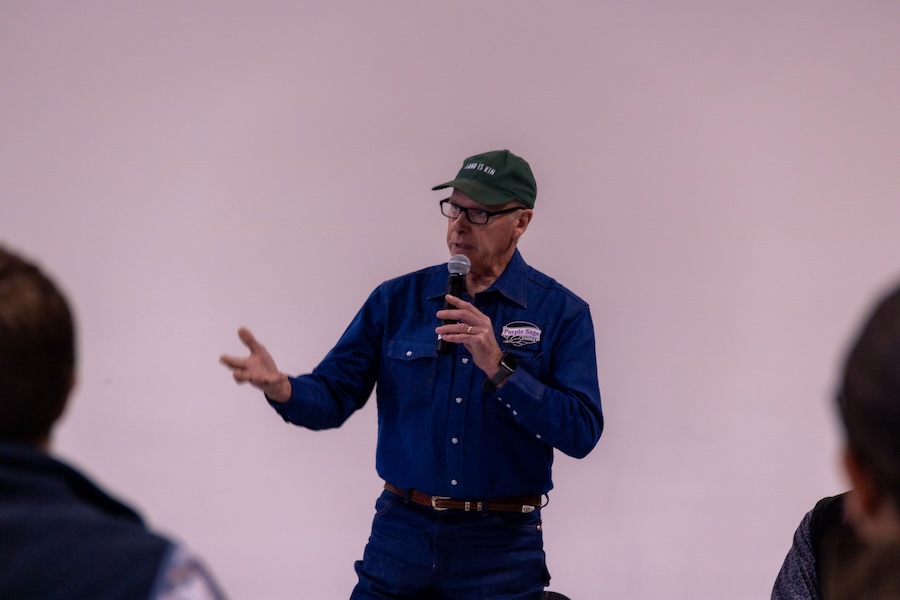
During my conversations around this, it definitely felt like a rebirth and return to something grounding. A superstar supporter for the conference, Jackie Sommer, suggested that we make the theme “Back to Our Roots,” grounding the event to folks who have been farming sustainably for decades. Ariel Agenbroad suggested our keynote speakers could even be from the founding Organic Council of Idaho. Now, this turned out to be less defined than first expected, but sent me down the path of talking to some of the oldest organically certified farmers in Idaho’s history. They all had a wealth of information, if a bit shy at times, but I was able to convince two of them to be our keynote speakers: Tim Sommer (below, left) and Nate Jones (below, right).
 |
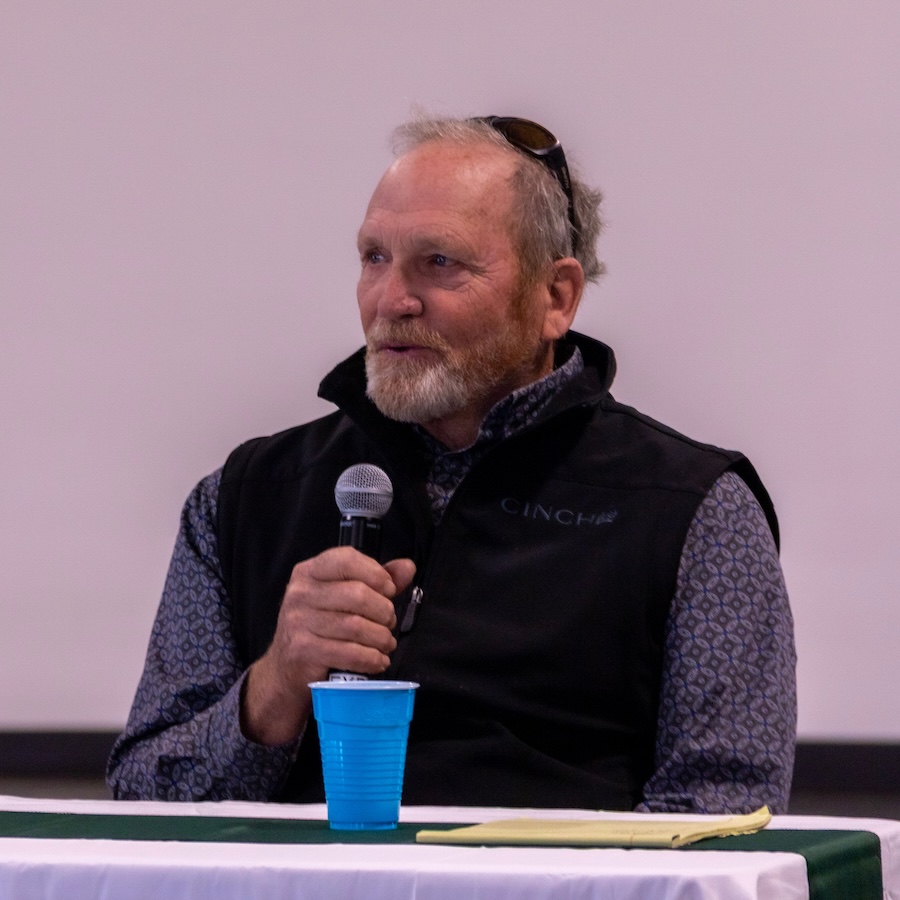 |
And the keynote speech was amazing! Their words were tended with care and watered with decades of experience. Hearing their story of getting into Organic for pragmatic reasons to keep their businesses afloat, finding something true and beautiful in the connection to the land, and the rough role of going against the grain of a farm world addicted to poisons and easy answers. Nate said his neighbors used to stop their truck near his field to ogle at the oddity that his fields and practices were. They still do that to this day, and he’s not sure if he’s really convinced any of them… Tim countered this by pointing to the room of farmers and advocates in the room and a new generation of folks picking up the torch: Tim’s son Mike, Nate’s son Wilder, and Frank Brossy’s son Cooper, along with many other younger farmers.
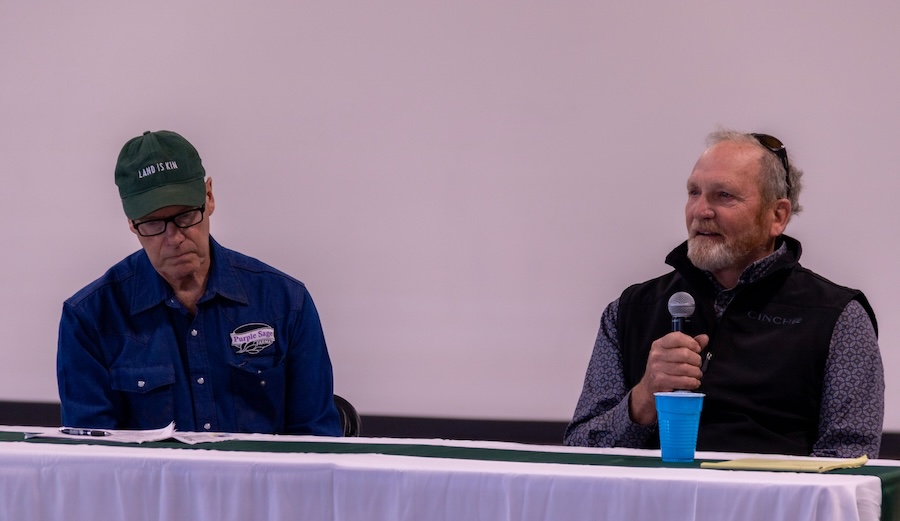
For me, it was inspiring to see how long people had been fighting for a more ecologically-sound system of agriculture here. How they worked with skill, intelligence, and care to build a bubble of sustainability in the harsh environment of Idaho. Nate opened my mind to how the movement has been deeper and larger than I knew, and Tim fired up my heart with his passionate words of hope and a call to action to push for a more sustainable and caring form of agriculture!
They were really bringing us back to the roots of the movement, and we even went a little deeper by having Lee Rice and Nate talk about some of the farmers who were part of it all. Along with Tim and Nate their names were: Gilber Rice (Lee’s dad), Mike Heath, Rick and Terry Eiler (who played a big role in mentoring Nate), Fred Brossy, Diane Green, John O’Connor, Steven and Reuben Miller, Mary Jane Butters (famously still selling dehydrated camping meals), David Ronniger, Bill and Connie Ward, Dick Parrot, Wayne Marshall (who is obsessively growing popcorn varieties now), and Mr. Brown the potato grower. Some of these people, like Lee’s dad, are no longer with us. Hearing how dedicated Gilbert and the Eilers were to sustainable and Organic farming was a touching reminder of the folks (many we may not know) who fought for the wins we have today, and the torch we are passed on to carry into the future.
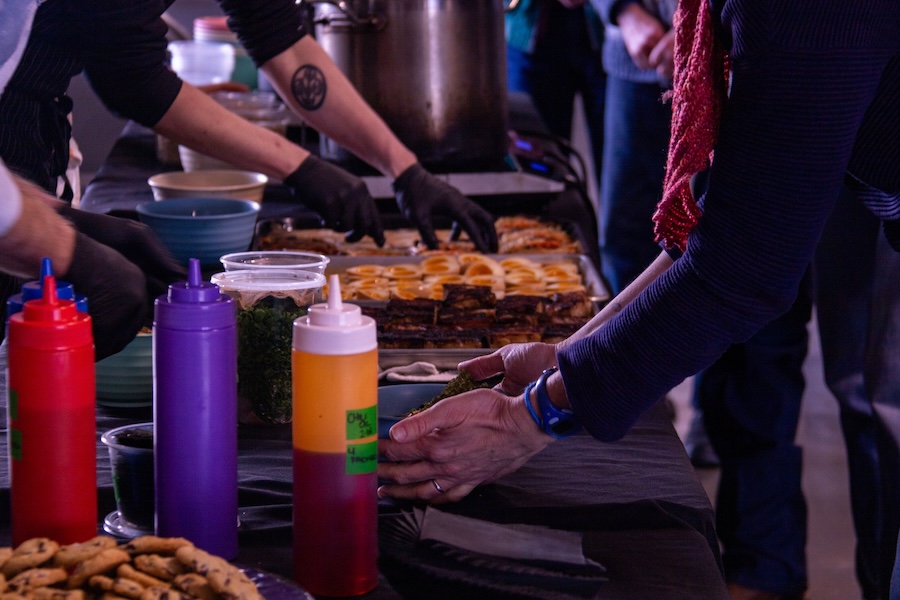
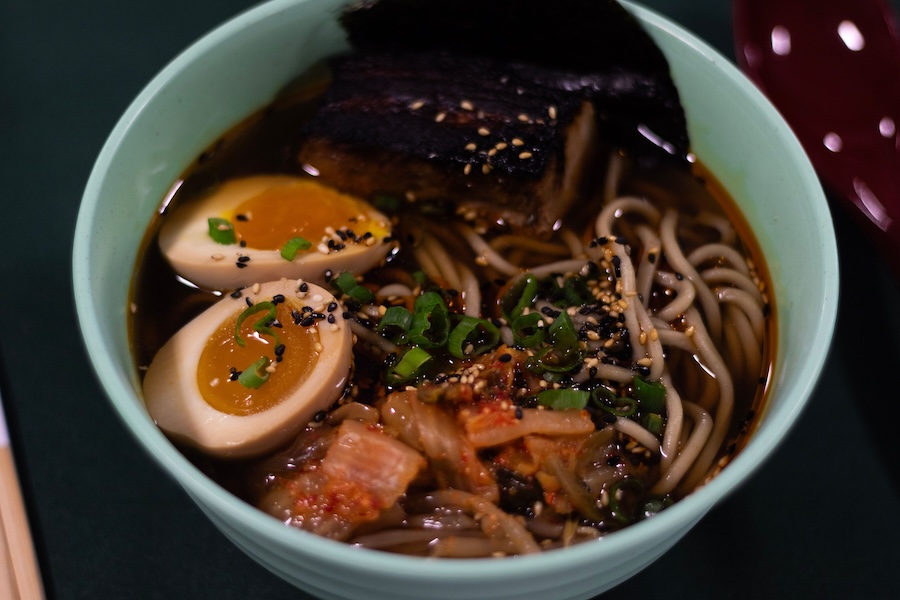
Beyond the keynote speech, we had a legislative update by Cynthia Gibson from the Idaho Conservation League on what is going on with Bayer-Monsanto’s state-level bills to try and remove liability for any health issues people are facing from glyphosate (RoundUp) and what’s stirring in the federal Farm Bill that is coming down the pipe. We also had an amazing meal (pictured below) from James Beard Award winning chef Kris Komori and his team at KIN: hand-made ramen with flour from Hillside Grain (Bellevue, ID), Daikon Kimchi and Smoked Veggie Broth (using ingredients from Fiddler’s Green in the Dry Creek Valley), and a Soy Egg and Braised Pork Belly (using ingredients from McIntyre Family Farms).
 |
 |
The conference also had, of course, a bunch of sessions on a whole slew of interesting topics. I wanted to give the speakers some earned recognition and a decent description of their session. It obviously won’t cover all the details of the sessions, but it should give you a rough idea, some links to further info, and some terms you can use to do some research of your own. And if you’re still not satisfied, you can always come down to the Magic Valley for next year’s Grower’s Own Conference and hear all the details from the horse’s mouth yourself!
Organics 101
Led by: Mike Sommer - Purple Sage Farms, Kristina Peterson - NRCS & Oregon Tilth, & Rebecca Frey - ISDA Organics
Rebecca kicked off this conversation by walking through what the Organic certification process looks like from the certifiers side, which was followed up by Mike talking about the record keeping and some Organic practices they implement to streamline their certification process. Mike talked about how the record keeping can be a bit of a lift, but that it creates a lot of benefits to his tracking and understanding of his management of the farm, and in the end he is only spending a handful of hours a year on Organic specific paperwork, in his estimation. Lastly, Kristina told us about some funding options that are available to transitioning and already organic farmers through NRCS and TOPP, primarily EQIP grants through NRCS and the TOPP Mentorship Program.
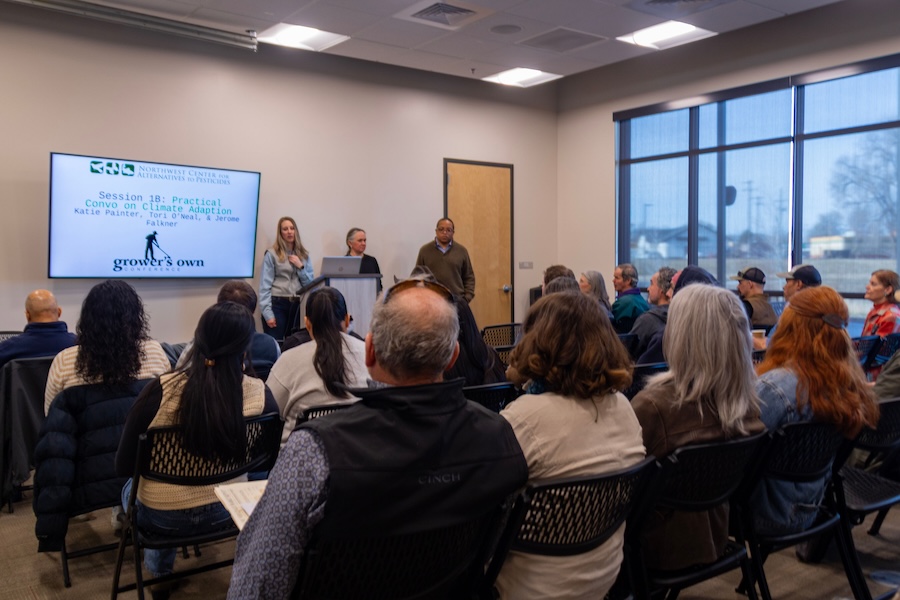
Practical Conversations on Climate Adaption
Led by: Katie Painter - ISED Solutions, Tori O'Neal - Desert Mountain Grass Fed Beef, & Jerome Falkner - NRCS
If anyone wants to argue the climate isn’t changing after this winter, I don’t know what to tell them… Luckily, Katie and Tori did! They had a very collaborative talk about the science behind climate change (with a heavy focus on the water cycle and carbon cycle), as well as the pros and cons of different Organic and regenerative practices. Two big points were: 1. Many Organic and regenerative practices start off with savings for the farmer with fewer inputs, fewer equipment passes, and reduced volatility and 2. The practices that fight against climate change also make a farm more resilient to climate change. Things like cover crops, reduced tillage, rotational grazing, etc. Jerome wrapped up the conversation with ways NRCS can help a farm or ranch be more environmentally conscious and resilient to a changing climate.
Cover Crops
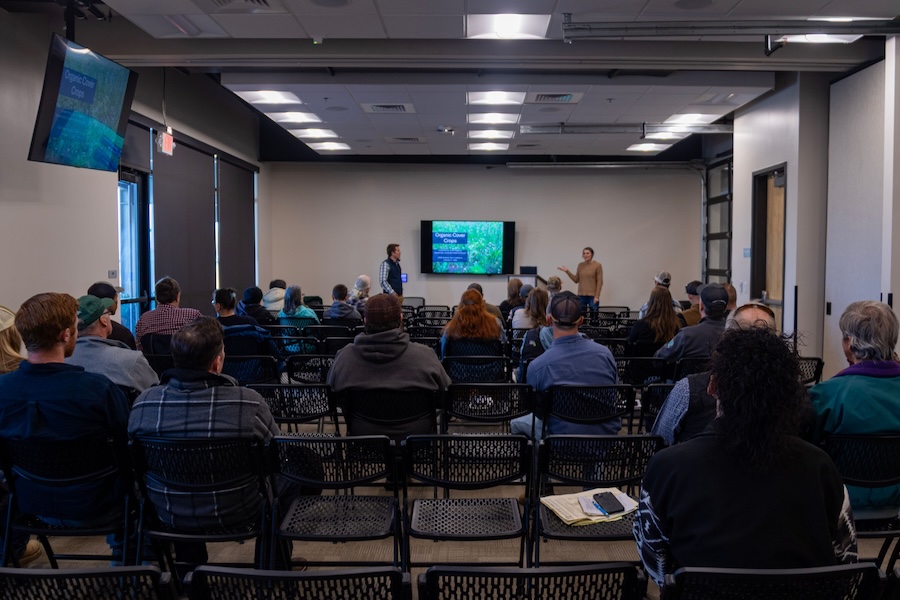
Led by: Kendall Kahl - UofI Extension & Cooper Brossy - Ernie's Organics
Growing a cover crop should be seen as serious as growing a cash crop… Indeed, it is a practice that can be instrumental for a successful cash crop. Cover crops can build soil, armor soil, increase nutrient availability, suppress weeds, increase water retention and infiltration, and more, but it is important to get the right mix of seeds, planting spacing, and termination techniques and timing. Cooper talked about a lot more details we don’t have the time for here, but you can watch a video of him giving a farm tour at this link. Kendall added a lot of academic research and scientific understanding to the discussion with info on ideal Carbon:Nitrogen ratios (~10:1 for most microbes) and how a diversified cover crop mix can provide a more effective and resilient practice.
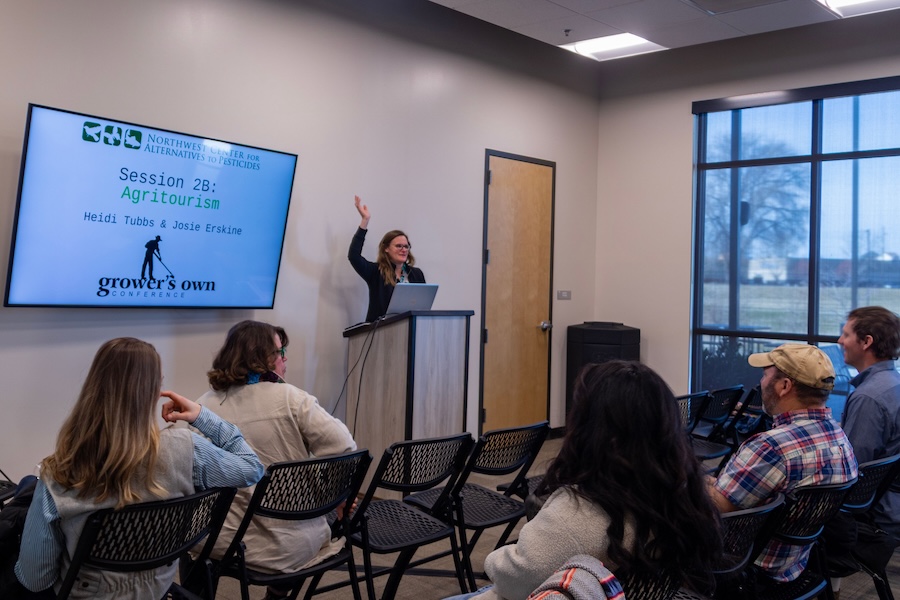
Agrotourism
Led by: Heidi Tubbs - Tubbs Berry Farm & Josie Erskine - Peaceful Belly & Polum Bolum
Heidi and Josie are a couple of powerhouses! They gave a brief overview of their expansive and impressive farms: Tubbs Berry Farm with hayrides, straw maze, cute animals, workshops, and a bee day, where Peaceful Belly has a farmstand, farm-to-fork cafe, u-pick flowers, seasonal festivals, and a new non-profit (Polum Bolum) to do more art and volunteer related work on the farm. One thing they both had issues with was their city’s Planning and Zoning Committee and they recommended starting conversations with them earlier rather than later. Most of the session was spent leading the farmers in the room through questions that got them thinking through how they could implement agritourism on their own farms.
Beyond Organic Certification
Led by: Tim Sommer - Purple Sage Farms, Nathanael Siemens - Rodale Institute, & Alexa Schieferecke - Real Organic Project
We got to hear from two farmers and two industry experts (Nathanael both runs a farm and works at Rodale) to learn about two certifications people can use to further their sustainability and Organic journey. Alexa talked with Nathanael about Regenerative Organic Certification, and with Tim (one of our keynote speakers) about the Real Organic Project: “add-on” certifications to USDA Organic. Whereas Organic has focused mainly on what inputs are used (for pest control, weed control, fertilizer, etc), these add-on certifications focus more on how inputs are implemented and what practices can be used to not only maintain soil health, but increase soil health over the years. They both are trying to shore up holes that have been torn open by lobbyists, and create a stronger certification. Look for either of their symbols on folks packaging or on the maps they have on ROP’s and ROC’s websites.
Funding Opportunities for Farmers
Led by: Kristina Peterson - NRCS & Oregon Tilth, Justin Buckley - Future Roots, & Jemila Chellappa - SARE
Kristina gave an in-depth description on how to apply for funds from USDA including EQIP, CSP, FSA’s Organic Certification Cost Share Program, Rural Development’s Value Added Producer Grant, as well as the TOPP Mentorship Program. Jemila shared about SARE (Sustainable Agriculture Research & Education) and how to apply for grants to do on-site research and outreach on a sustainable agriculture topic. All the farmers I know are always doing some kind of experiment, and with a little forethought and planning, you can get paid 1000’s of dollars to do so! Lastly we had Justin talk about a local food advocacy group, Future Roots, that provides interest free loans with flexible payment plans for projects that fill gaps in the local food system.
IPM (Integrated Pest Management)
Led by: Kirk Tubbs - Tubbs Berry Farm, Garret Stahl - Salmon Valley Stewardship, & Jemila Chellappa - UofI Extension
The talk started with Jemila grounding us in the broad concepts of Integrated Pest Management, especially the three foundational ideas: Ecological Understanding, Threshold-based Action (in contrast to doing pest treatments regularly), and Selecting Least Disruptive Controls. We then moved into some on-farm research and personal practice Garret has had with occultation: using tarps that are opaque (whereas “solarization” uses see-through tarps). Reduced tillage and fossil fuel usage, reduced need for heavy equipment (especially on small farms), and more effective perennial weed control are some of the benefits of occultation, especially if used in a “pulse” technique (have the tarp on for weeks, off for a couple days, and back on). We then ended with Kirk who does so much IPM on his farm that he could have talked the whole conference and still have had more to teach us! We had time to hear him talk about his control of squash bugs by removing habitat through cleaning fields with sheep and chickens, using trap plants that are burned after eggs are laid, and increasing natural predators like Scelionid Wasps and California Quail.
Agricultural Labor
Led by: Miguel Garcia - Garcia Farm Labor & Irene Ruiz - IORC
This session was an emotional high-point for me. Irene gave an amazing speech about the work IORC is doing to help farmworkers with mutual aid that is enabled by the JJ Saldaña Heat and Smoke Relief Fund. They have also collabed with Woodland Empire on a specialty IPA beer that honors hop harvesters and a fundraiser of a bandana designed by local chicano artist Miguel Almeida. That doesn’t include all the personal stories from immigrant farm laborers who they met while bringing aid to them out in sweltiering fields.We heard from some especially strong women who feed our state and deal with issues from the pesticides and harsh labor conditions while harvesting. After this, Miguel talked about coming from an immigrant farm labor family and later becoming a farm labor contractor that hires workers all across the NW to work on farms in the area. There’s an economic issue to immigrant labor in Idaho, where we pay significantly less than neighboring states and have a much more hostile atmosphere towards them too, which can make it hard for Miguel to find people to work here. On a more emotional level, he also talked about the fear and hardship that families he knows and works with are going through: good people with no criminal records who are working hard to support their families being caught up in the raid at Wilder and facing detainment and deportation. This talk was incredibly heartbreaking and inspiring for me.
Lastly, we also had a lot of wonderful orgs tabling that do impactful work in the region, check them out: Hungry Planet Organics, ISDA Organics, NCAP, Oregon Tilth, RANI, Real Organic Project, Rodale Institute, Salmon Valley Stewardship, SARE, Soda Springs Solar Gardens LLC, Taproots Farmhub, TVCGCoop
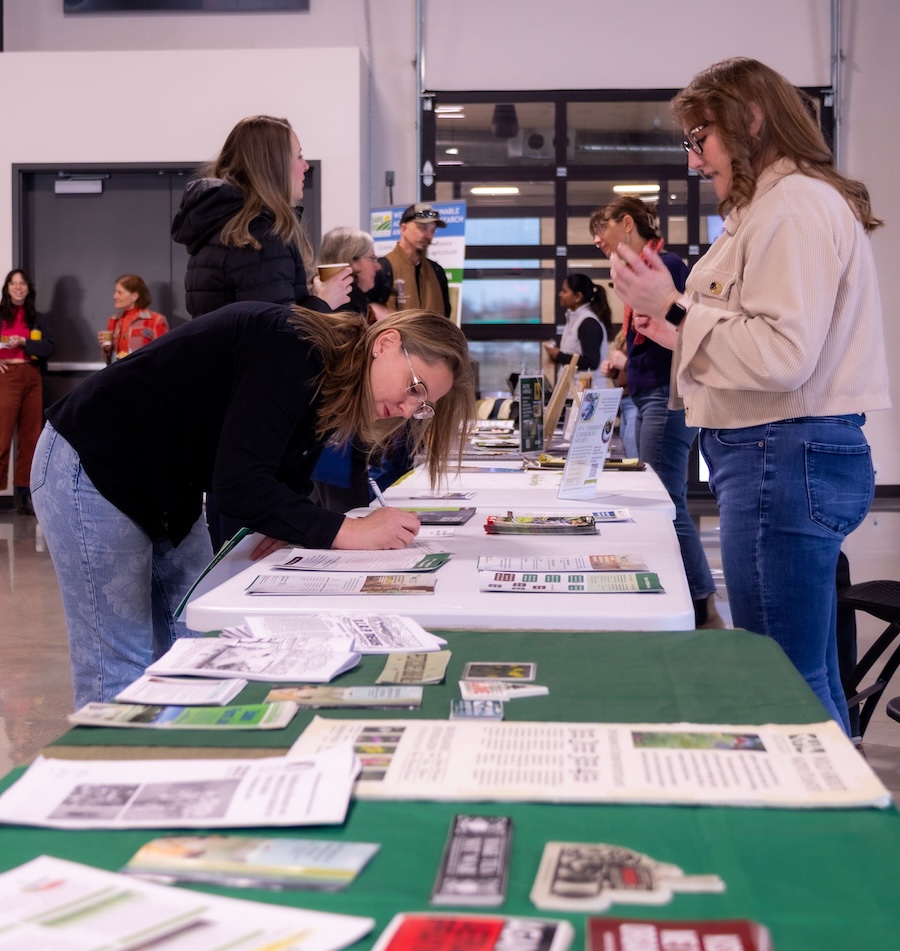
What a day! It was full of important conversations and connections, both inside and outside of sessions. It was especially touching and inspiring to hear the speeches of our keynote speakers. We filled our bellies with a phenomenal, locally sourced lunch, and it was wonderful to reconnect with old farm friends and make some new ones. As one attendee put it: “Best conference I have been to in years. It felt like a true cultivation of community.”
Look forward to seeing you at the next one!
All the best,
Ben Trieu
Healthy Food and Farms Program Specialist