



The links below will take you to an NCAP webpage or factsheet (PDF) with additional information. NCAP grants permission to print out and copy these articles. You may distribute as many copies as you want, but they must be free to recipients. Also see our Pest Management Guide for a step-by-step process for dealing with pests.
For expert advice on your pest or weed issues, check out our Pest and Weed Management Consultation services!
-
Small Ants
- If ants invade your house, don't panic. Sanitation and physical controls can effectively reduce household ant populations while letting ants play their part in the environment.
-
Carpenter Ants
- If ants invade your house, don't panic. Sanitation and physical controls can effectively reduce household ant populations while letting ants play their part in the environment.
-
Azalea Lace Bug
- A major nursery concern due to aesthetic leaf damage; keep plants healthy and monitor for signs to reduce impact.
-
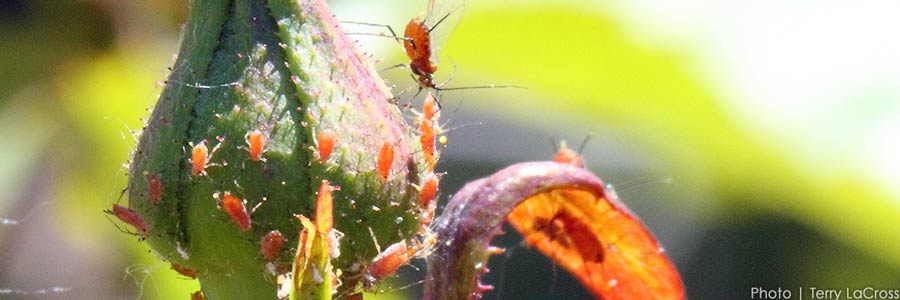
Aphids
- Sticky honeydew on cars or “extra protein” in homegrown broccoli? Likely aphids—common in yards and gardens.
-
Bed Bugs
- Resources for property managers and others to handle outbreaks without harmful chemicals.
-
Bees & Wasps
- Identify the insect and assess the threat before acting; least-toxic options are available.
-
Billbugs
- Discourage with turf varieties and proper watering; beneficial nematodes are an effective pesticide-free solution.
-
Box Elderbugs (factsheet)
- Living with box elderbugs can be simplest; reduce numbers with routine cleaning and exclusion.
-
Clothes Moths
- Furrows, holes, or threadbare spots in woolens point to clothes moths; protect and store garments properly.
-
Codling Moths
- “Worms” in apples/pears are often codling moth larvae—manage in both backyard trees and orchards.
-
Cutworms
- If seedlings look mowed down overnight, cutworms may be the culprit; use collars and nighttime checks.
-
Crane Flies (factsheet)
- Keep lawns healthy with adequate fertilizer and water; beneficial nematodes can reduce high populations.
-
Deer
- Habituated deer need patient, multi-pronged approaches: exclusion, plants they avoid, and habitat tweaks.
-
Earwigs
- Females tend their young—rare among insects; use traps and habitat management to limit damage.
-
Fleas
- Weekly wash throw rugs/bedding, use flea combs, vacuum, and apply nematodes where pets rest.
-
Fruit Flies
- Find and eliminate breeding sites; use simple traps to keep populations in check without pesticides.
-
Gophers
- Protect prized plants and use least-toxic techniques to address burrowing damage.
-
Grasshoppers
- Threat increases during the nymph stage; regional outbreaks typically cycle every 7–10 years.
-
Indian Meal Moths
- Common pantry pest; adults are harmless—the larvae contaminate stored foods.
-
Integrated Pest Management (IPM)
- Follow the five basic IPM steps to minimize or avoid pesticide use.
-
Lacewings: Beneficial Bugs! (factsheet)
- “Aphid lions” in the larval stage—lacewings prey on many common garden pests.
-
Mice
- Seal openings ≥ 1/4"; store food securely; keep shrubs/brush away from structures.
-
Moles
- Soil-health contributors; rake mounds, consider alternative groundcovers, castor oil, or trapping if needed.
-
Mosquito Repellents & Personal Protection
- Reduce bites with protective clothing and repellent—especially where disease risk exists.
-
Mosquito Spraying Opt-Out Program
- In some abatement districts you can opt out to avoid pesticide spraying on your property.
-
Pillbugs & Sowbugs
- Beneficial recyclers, but can damage young shoots/roots and produce on damp ground; manage habitat and moisture.
-
Rats
- Contaminate food and spread disease; use exclusion, sanitation, and trapping—avoid poisons.
-
Root Weevils (factsheet)
- Identify, detect, and prevent damage on flowering shrubs and edibles using least-toxic approaches.
-
Slugs
- Clear shelters; handpick; use traps/barriers to keep gardens productive without pesticides.
-
Spiders (Control)
- Most spiders are harmless and beneficial, contributing significantly to insect control.
-
Spiders (Identification)
- ~3,000 species in North America; only a few cause problems—learn to identify them.
-
Squash Bugs
- Troublesome on pumpkins, winter squash, and sometimes melons; monitor and manage early.
-
Termites (Dampwood)
- Essential decomposers in nature; in structures they require targeted, least-toxic management.
-
Termites (Subterranean & Other)
- Essential decomposers in nature; in structures they require targeted, least-toxic management.
-
Ticks
- Prevent bites with landscape tweaks, tight-fitting clothing, and pet management.
-
Voles
- Reduce populations with mulch, mowing, cultivation, fencing, and traps; they’re also key prey in ecosystems.
-
Web Worms & Tent Caterpillars
- Use simple, least-toxic methods to manage nests and protect trees.
-
Yellow Jackets (factsheet)
- Useful insects that can become painful pests; reduce attractants and use trapping when necessary.
-
Yellow Jackets
- Useful insects that can become painful pests; reduce attractants and use trapping when necessary.