



Ana Elisa Wilson interviews an anonymous farmworker who shares details of unprotected workers exposed to pesticides in Echo, OR, Umatilla County. As an area with large amounts of farmland and agricultural pesticide use, there is concern for environmental and soil damage, protection for workers, irreparable health risks, and risks of proximity to homes in the area.
Report conducted on: 6-1-2025
Testimony from: An anonymous NCAP volunteer
Occupation: Farmer
Resident of: Hermiston, OR
Location: Echo, OR, Umatilla County
Subject: Pesticide spraying in an onion and potato agricultural field, workers with dangerously limited protection.
Main concerns:
-
Environmental and soil damage
-
Workers' protective equipment is omitted
- Irreparable health risks (as applicable)
- Risks of proximity to homes in the area
Anonymous Testimony:
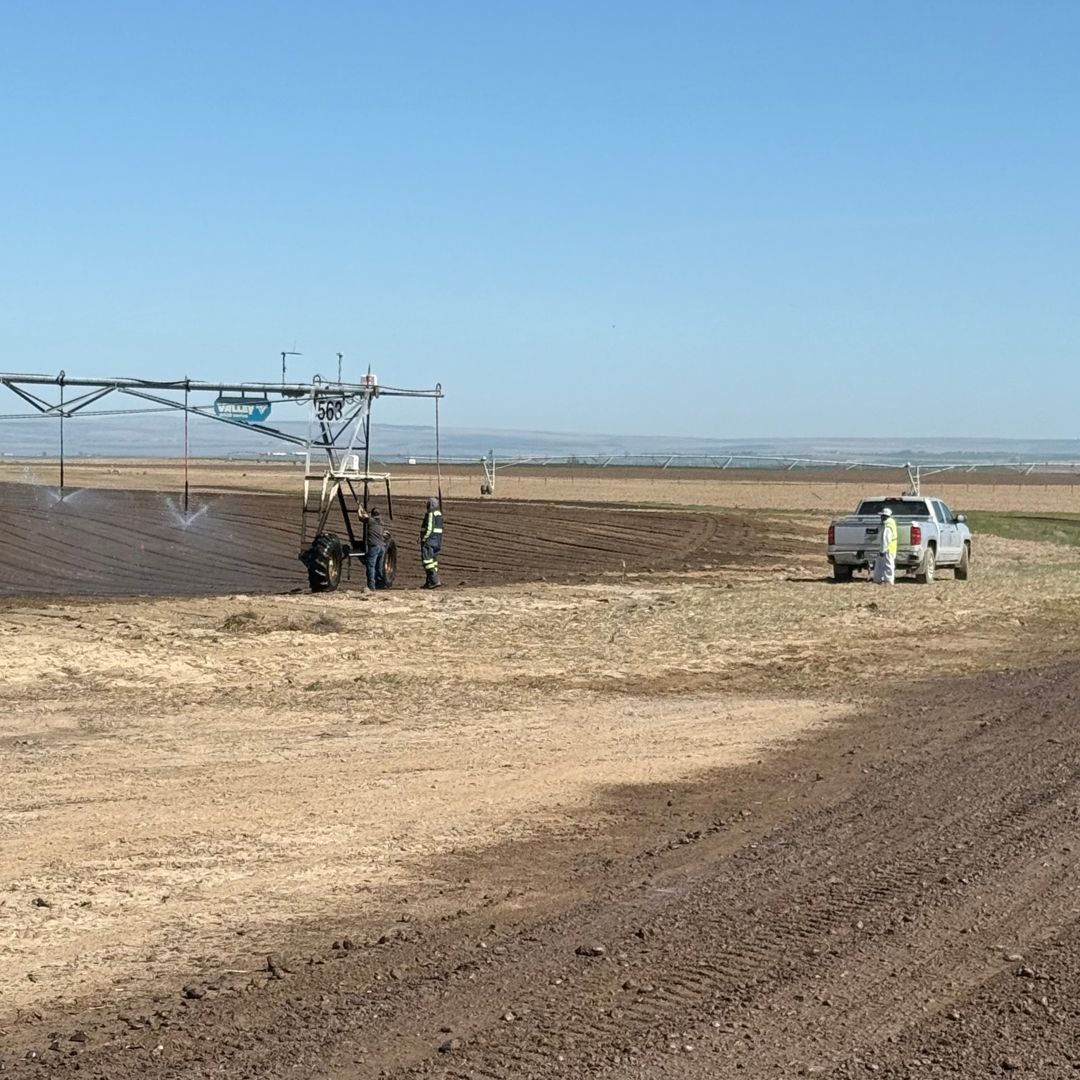
“On the morning of April 19th, I was going to tour some farmland, and a crop area caught my attention. I went to park my car at a safe distance, and observed some high-tech machinery being used on an agricultural field of approximately 100 acres.”
“I noticed that the crop field was planted with onions, and in the circle where the spraying machine was, there were three people doing their best to get it to turn on. The sprinklers, where the pesticide liquid should come out, were somewhat blocked.”
“I was able to recognize a person in the distance, the person leaning against the white truck, who is the supervisor of that planting ranch. In the photo he is about 15 meters from the spraying machine, and wearing an incomplete protective suit.”
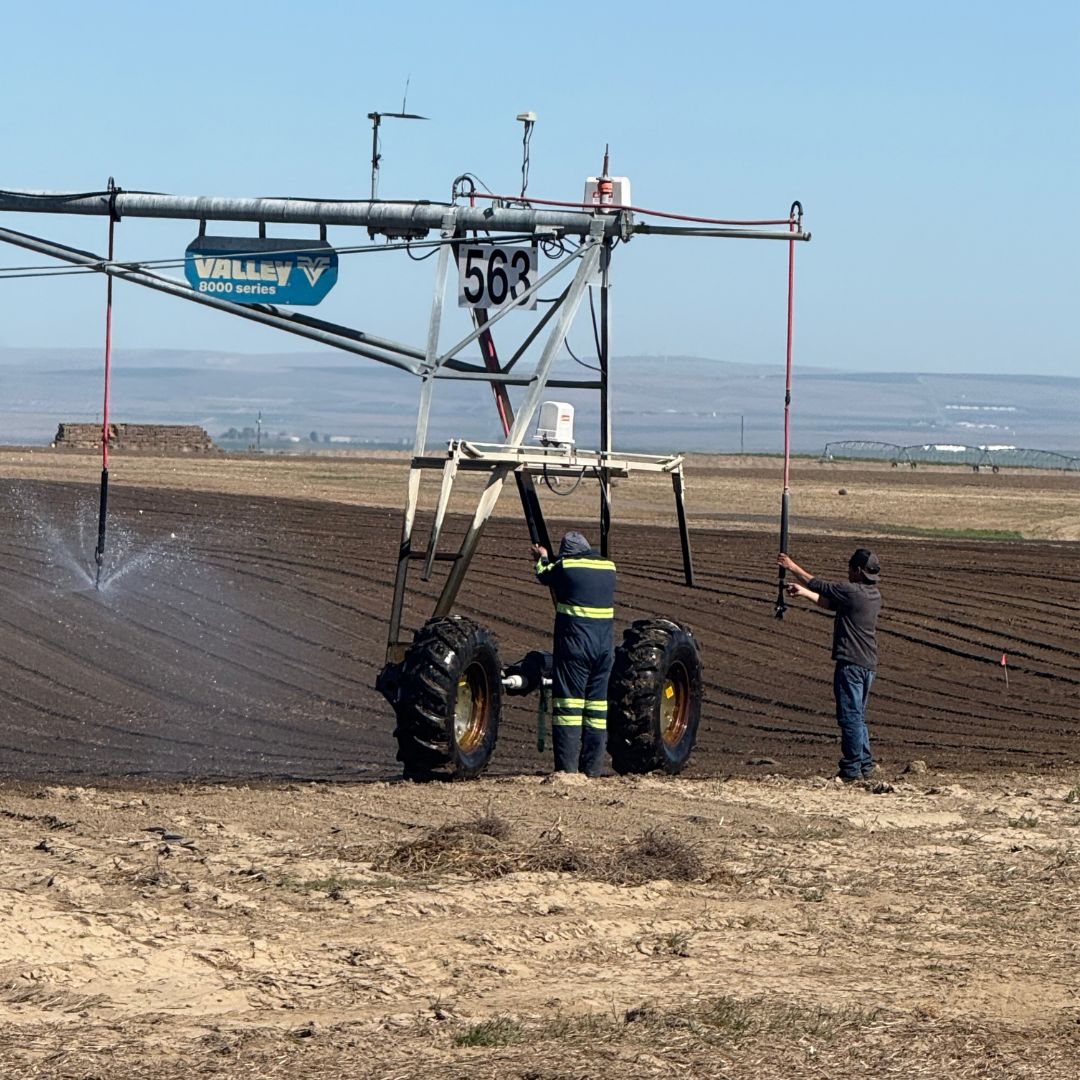
“I made sure to be cautious when taking the photos, because I wouldn't want to get into any trouble, but I was there long enough to realize that the two people checking the sprinklers, one of them wearing semi-complete protective equipment, were not wearing gloves, a mask, or special boots.”
“Above all, the other person checking the sprinklers more closely, who was trying to unclog the tubes or ducts through which the pesticide liquid comes out, had no protection at all; his hands were exposed to the elements, and he had no glasses, gloves, boots, or special suit. There was nothing to protect him from being sprayed with pesticide.”
The volunteer also wanted to mention that it was windy that day, and wind causes pesticide drift. He said he could feel some small particles in the gusts of wind, and he detected the smell of pesticides. He also added that just two miles away, there were homes where farmworker families were located.
Considering the large acreage, the size of the land, and his experience as a farmworker, he made an estimation of the speed at which the pesticide-dispersing machine was operating. The machine was operating at 20% of its maximum power, very slowly. Allowing the machine to gradually integrate the pesticide into the subsoil, thus creating a pesticide-infused soil in the onion field.
These lands in Echo are used for agriculture and livestock, and the people in the area lack educational services and resources (particularly in Spanish) to know exactly what they are being exposed to and the potential dangers they are up against. There are many cultural barriers, in addition to limited opportunities for advancement. This creates an environment where families and children are living in unfair, unhealthy and potentially toxic circumstances.
The volunteer continues their testimony:
“I remained there for about an hour, taking photos and being careful so as not to breathe the pesticide, but I could smell it. I could only think about not getting infected or breathing in the pesticide. I thought about my family. If I were to get cancer or be poisoned by chemicals, how would my family be able to support themselves? I have granddaughters to protect. I think also of the children from these families, who live around the farmland, how will their health be if they can’t breathe clean air? And some of the homes in the area have wells, and people drink that water which could also be contaminated."
"That's why I took photos and offered my testimony. I want to prevent this from spreading and raise awareness about taking precautions and using the correct equipment to avoid inhaling and absorbing anything that could infect our skin, eyes, throat, head, and feet."