



(By Kaitlyn Parks, Healthy Food and Farms Program Manager)
Over the past several seasons, our team has been supporting a restoration project at the Camas Prairie Centennial Marsh Wildlife Management Area, managed by Idaho Fish and Game. The project, led by the Shoshone-Bannock Tribes, is focused on restoring populations of Camas (Camassia quamash), which is a culturally important wild food plant traditionally harvested by Tribal members.
In recent years, Garrison creeping meadow foxtail (Alopecurus arundinaceus) — a pasture grass introduced for grazing — has spread aggressively across the prairie. Spreading by both seed and rhizomes, it has outcompeted camas in many areas, reducing plant diversity and affecting traditional harvesting sites.
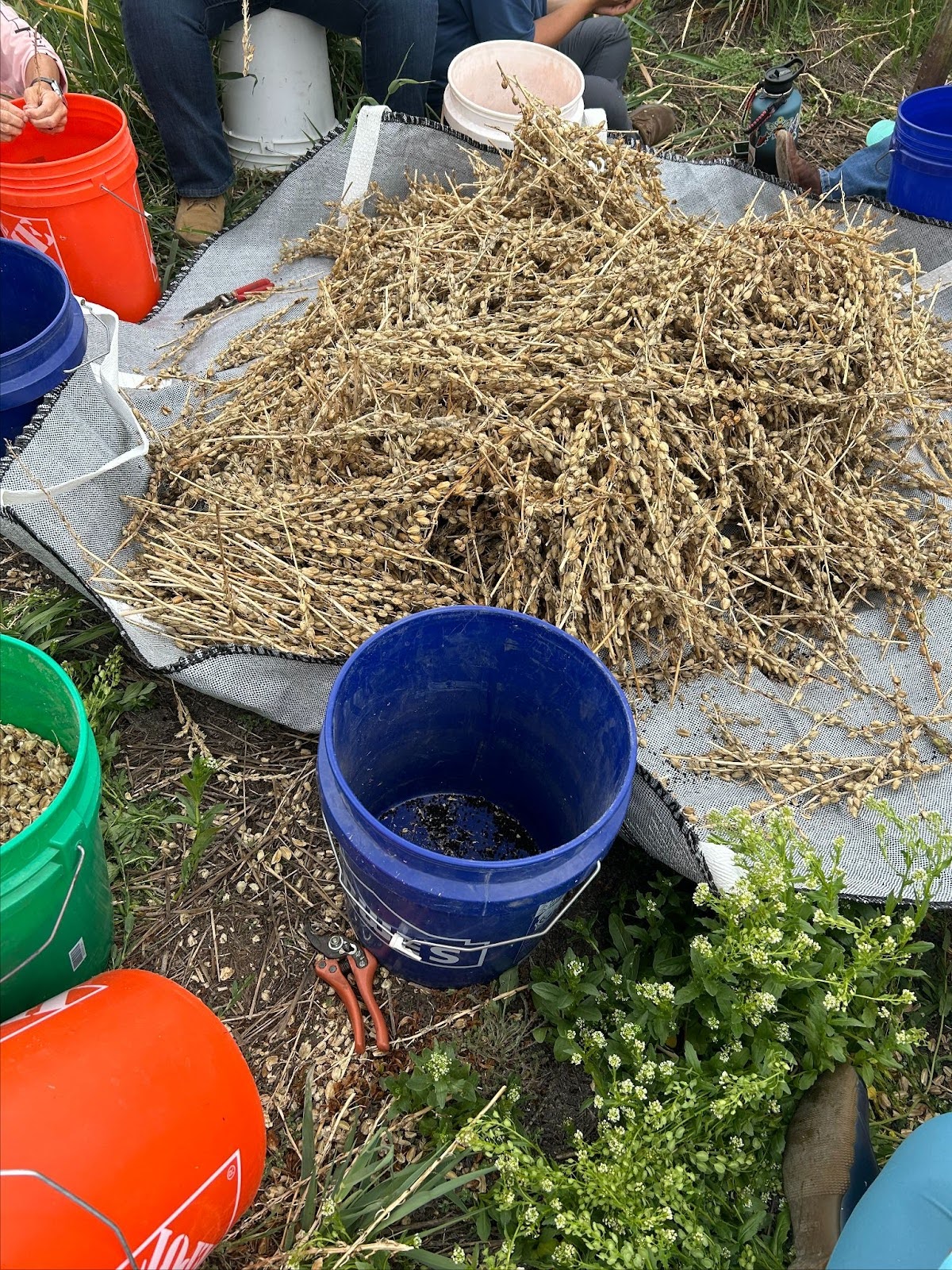
Our team has been assisting with plant surveys and experimental trials. This season, we worked with partners to identify plant species across a series of research plots, joined volunteers in collecting camas seeds, and supported ongoing field trials testing various treatment combinations to evaluate which methods might support camas recovery. These methods include mowing, raking, and seeding. We will be continuing to explore other non-toxic methods of managing this grass.
We’re looking forward to continuing to support the effort and sharing what we learn as results develop.
Project partners include:
Shoshone-Bannock Tribes, Idaho Fish and Game, Rodale Institute, Idaho State University, the Bureau of Land Management (BLM), and dedicated volunteers.
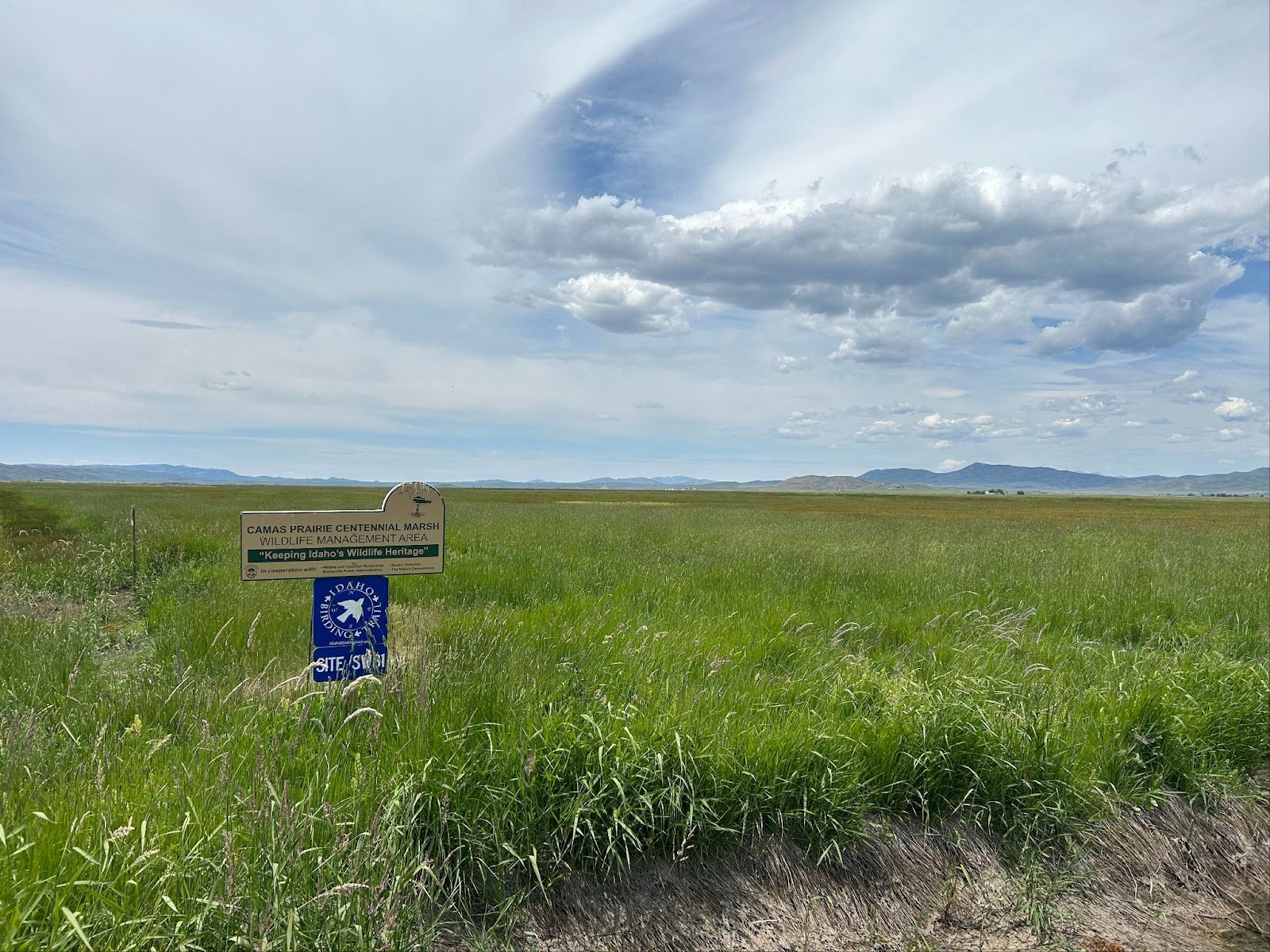
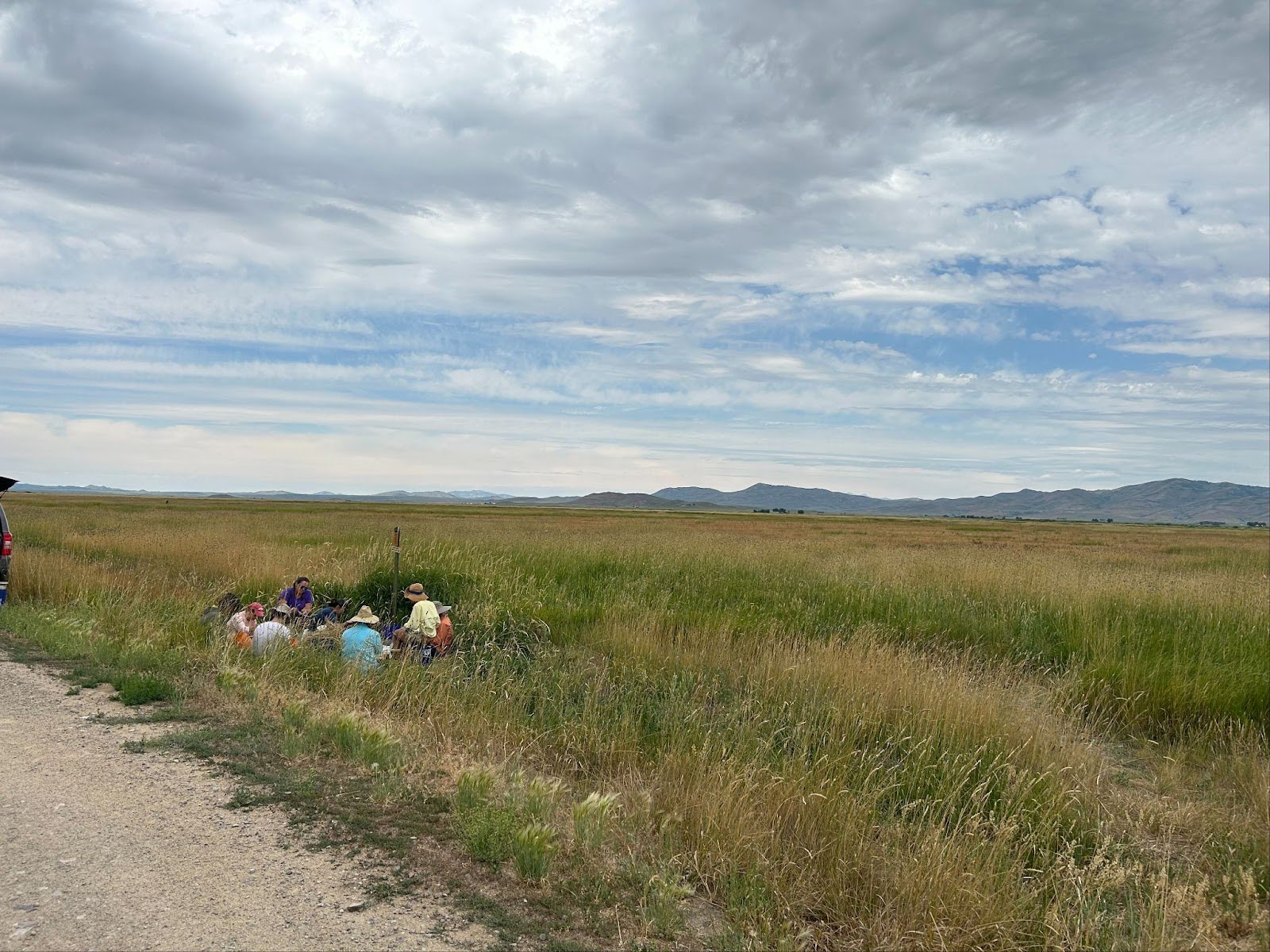
Photos: Camas Prairie Centennial Marsh Wildlife Management Area, Volunteers processing camas seeds to prepare for seeding, close up of camas seeds collected by volunteers and project partners.